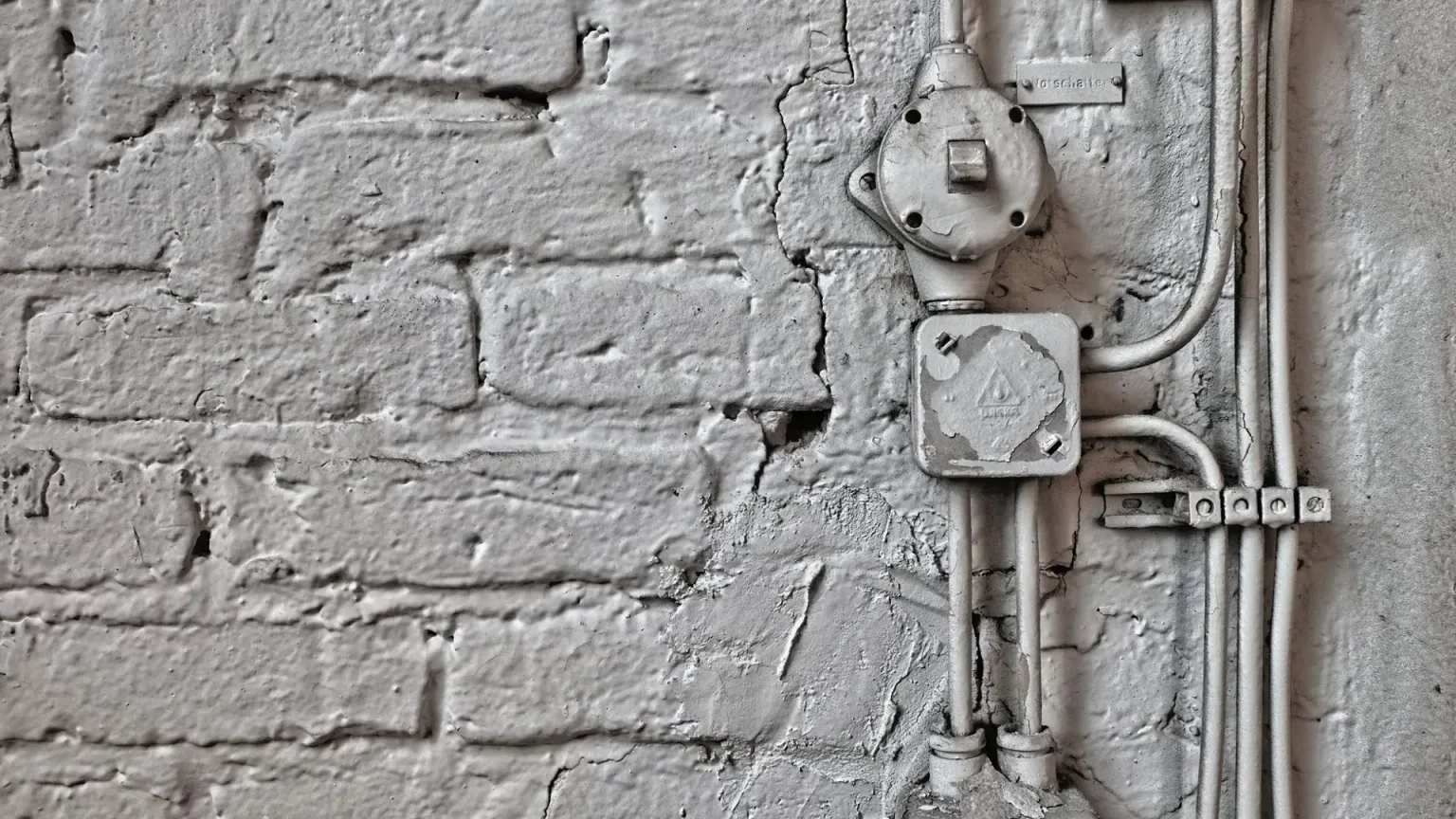
What older housing in Bristol means for rewiring
Bristol has a large stock of older housing. Victorian and Edwardian terraces, interwar semis and older houses converted into flats all sit alongside newer homes, and each has a different electrical history. Rewiring an older house is rarely a matter of replacing like with like. The walls may be solid, the floors may be suspended, the original installation may have been partly upgraded and the loft or cellar may hold cables that are difficult to reach. This guide explains the common issues in older Bristol housing and how a careful electrician approaches them.
Solid walls and chasing
Many older Bristol houses have solid masonry walls rather than the cavity construction used in later homes. Cables in a solid wall cannot be hidden in a cavity, so they must be run in chases cut into the plaster or brickwork, or routed in surface trunking where appropriate. Cutting chases is slow and dusty work, and it creates a lot of making good afterwards. The depth and direction of each chase must be planned to avoid cutting into structural elements or running cables where they could be damaged by nails and picture hooks later.
Where chasing is not practical, some electricians use surface-mounted routes that run along skirting boards, architraves or cornices. These routes are less intrusive than deep chases, but they change the appearance of the room and may not suit every householder. The choice is a balance between the disruption of concealed work and the visual effect of surface cabling, and it is one that should be discussed before the work begins.
Original and partial rewires
Few older houses have an original installation that is still in its first form. Many have been partly rewired at some point, perhaps when a kitchen was extended or a bathroom was added. A partial rewire can leave a mix of old and new cabling, with different standards and different protection in different parts of the house. The electrician must understand which circuits are sound, which are obsolete and how the two can be joined safely.
This mix is one of the reasons older houses are harder to quote for. An electrician who inspects the property carefully will identify the sections that need replacing and the sections that can be retained after testing. A firm that quotes without inspection may simply price a full rewire, or it may underestimate the work needed to tie old and new circuits together. Ask each firm to explain which parts of the installation it intends to keep and how it has tested them.
Bonding and earthing
Earthing and bonding are often the most important upgrade in an older house. Many older installations have little or no earth protection, or they have earthing that has been disconnected, corroded or never fitted. Metal water pipes, gas pipes and other metal services should be bonded to the main earth so that they are at the same potential in a fault. Without proper bonding, a fault can leave a dangerous voltage on exposed metal in the house.
Upgrading the earthing and bonding is not optional when the installation is being rewired, because the new circuits must be connected to a properly earthed system. The work involves checking the main earth connection, adding bonding where required and testing the continuity of the earth path. The IET's BS 7671 standard sets out the requirements, and an electrician applies them to the house as it stands. General information on earthing and bonding in older homes is available from Electrical Safety First.
Protecting the fabric of the house
Older houses have original features, such as lath and plaster ceilings, decorative mouldings and timber floors, that must be protected during the work. An experienced electrician will plan routes to minimise damage and will lift floorboards carefully so that they can be reinstated. Some firms are more careful than others in this respect, and the quality of the making good is one of the things that separates a good rewire from a poor one.
Where the house is protected by heritage status or sits in a conservation area, the approach may need to be more cautious. In those cases the consents involved should be confirmed with the local planning authority before any work is planned.
Living in the house during the work
A rewire in an older house usually means a period of disruption, and planning for it helps. Chasing and cable routing create dust and noise, and floorboards may be lifted in several rooms. Power is often switched off for part of the day while the new circuits are connected, so it helps to plan for the lighting, cooking and heating arrangements during the work. A householder who knows which rooms will be opened first and when power will be off can make practical arrangements in advance.
It is also worth agreeing how the work will be sequenced. Many electricians prefer to run cables in the first stage, then complete the accessories and making good in later stages. The sequence affects how long the house is disrupted and how much dust spreads through the rest of the building. Ask the firm to set out the sequence in writing, and check how it intends to protect the rooms that remain in use.
Budgeting for the unexpected
Older houses are more likely to reveal problems once the work begins, and it is sensible to plan a contingency. A rewire may uncover damaged joists, rotten floorboards, previous repairs that were poorly done or wiring that was hidden behind later plaster. Each of these can add time and cost, and the householder should agree in advance how such findings will be handled. A firm that includes a reasonable allowance for the unexpected, and explains how it will be used, is easier to plan around than one that treats every finding as a surprise.
It helps to ask the electrician what they would expect to find in a house of the same age and type. An experienced electrician will be able to describe the common issues without guessing at the specific property, and that conversation often shows whether the firm has worked on similar homes before. Ask for examples, and ask how the firm reports findings during the job so that decisions can be made promptly.
Inspection and planning
A rewire of an older house begins with an inspection. The electrician should test the existing installation, record its condition and identify the work needed to bring it to a safe standard. The results may be recorded in an inspection report, and that report can be a useful basis for comparing quotes. The guide on reading a Bristol EICR explains how these reports are structured and what the outcomes mean. The NICEIC website advises homeowners to have an electrical safety check (EICR) at least every 10 years, so an older house that has not been checked for some time is a sensible place to start.
A quote for a particular house can be requested through the quote request page. For a wider view of what the firm covers, the services overview lists the rewiring and electrical work offered in Bristol, and the frequently asked questions address the usual concerns about older properties.
Sources and further reading
- Electrical Safety First (Electrical Safety First)
- NICEIC (UK Electrical Certification and Training)
- BS 7671 - 18th Edition (The IET)